Undetected past contacts with technological species: implications for technosignature science
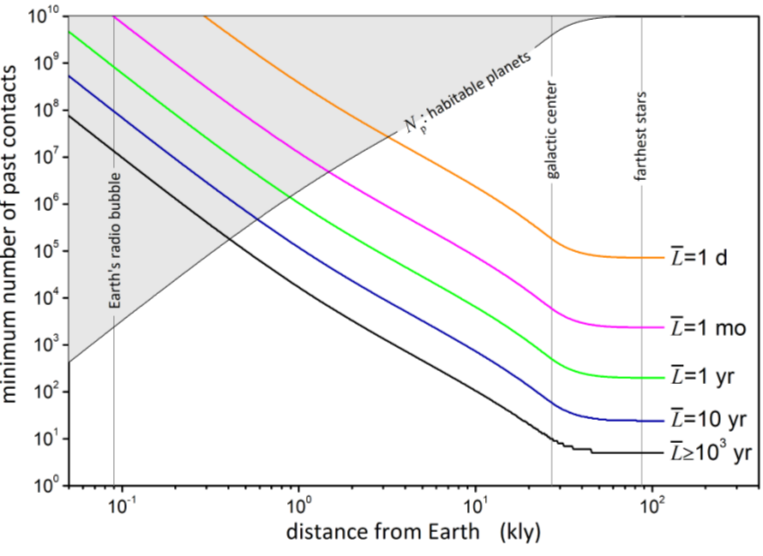
Could past extraterrestrial technosignatures have reached Earth unnoticed? Using Bayesian inference, I show that maintaining a high probability of detecting them today would require an implausibly large number of past contacts, exceeding the population of habitable planets within a few hundred light-years. This poses a severe challenge to the hypothesis of undetected nearby contacts.
Technosignatures Longevity and Lindyʼs Law
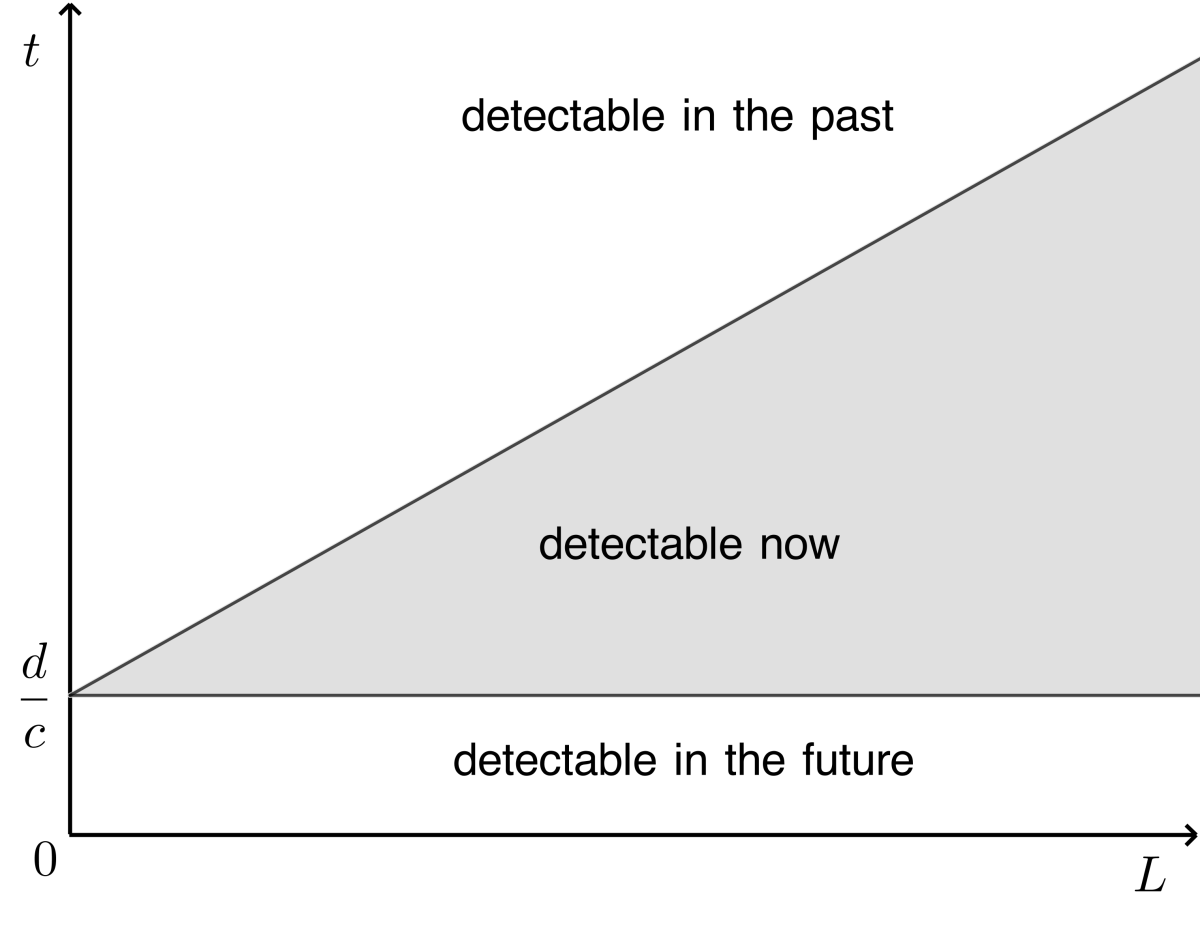
The probability of detecting technosignatures increases with their longevity. We investigate whether their lifetimes follow Lindy’s law, under which remaining life expectancy is proportional to age. If so, the common expectation that the first detected technosignature should be exceptionally long-lived may not hold.
Inferring the Rate of Technosignatures from 60 yr of Nondetection
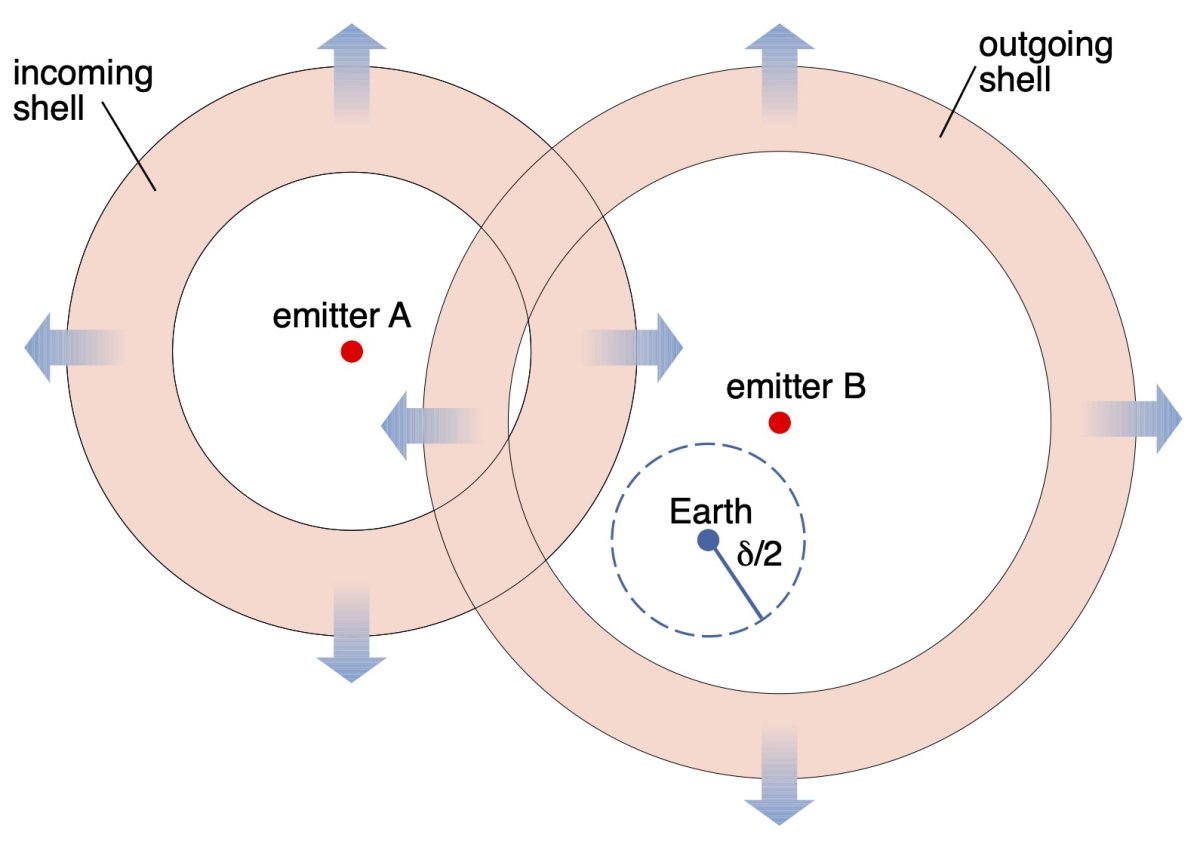
After six decades of unsuccessful SETI observations, technosignatures may simply be too rare for any to be reaching Earth today. I derive upper bounds on their emission rate and estimate how long we may have to wait for the next signal to arrive. The results suggest fewer than about one to five emissions per century and median waiting times of at least 60–1,800 years.
Bayesian approach to SETI
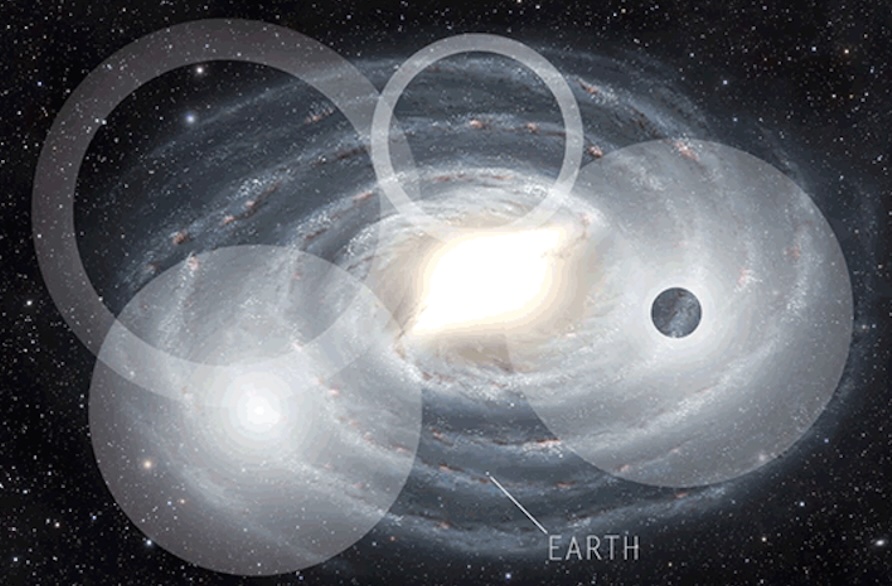
We develop a Bayesian framework for SETI to infer the mean number of extraterrestrial radio signals crossing Earth from the outcomes of all-sky surveys. A null detection within ∼40 kly is consistent with no detectable emitters in the Galaxy, whereas the detection of a single signal within ∼1 kly would imply that, on average, more than 100 signals are currently crossing Earth.
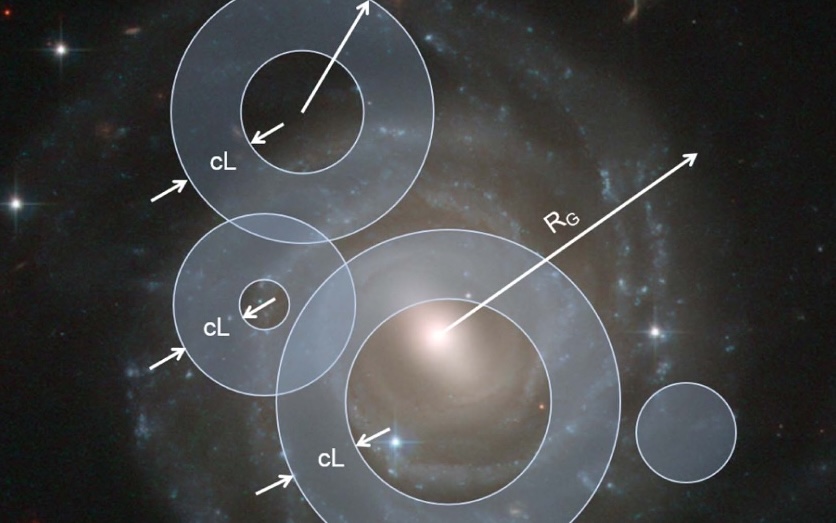
Area Coverage of Expanding E.T. Signals in the Galaxy: SETI and Drake’s N
We show that the Drake equation’s N—the number of currently emitting civilizations—is equal to the mean number of isotropic signals crossing Earth at any given time. This makes N a measurable quantity that can, in principle, be estimated probabilistically from SETI observations.
C. Grimaldi, G. W. Marcy, N. K. Tellis, F. Drake, PASP 130 054101 (2018)
Signal coverage approach to the detection probability of hypothetical extraterrestrial emitters in the Milky Way
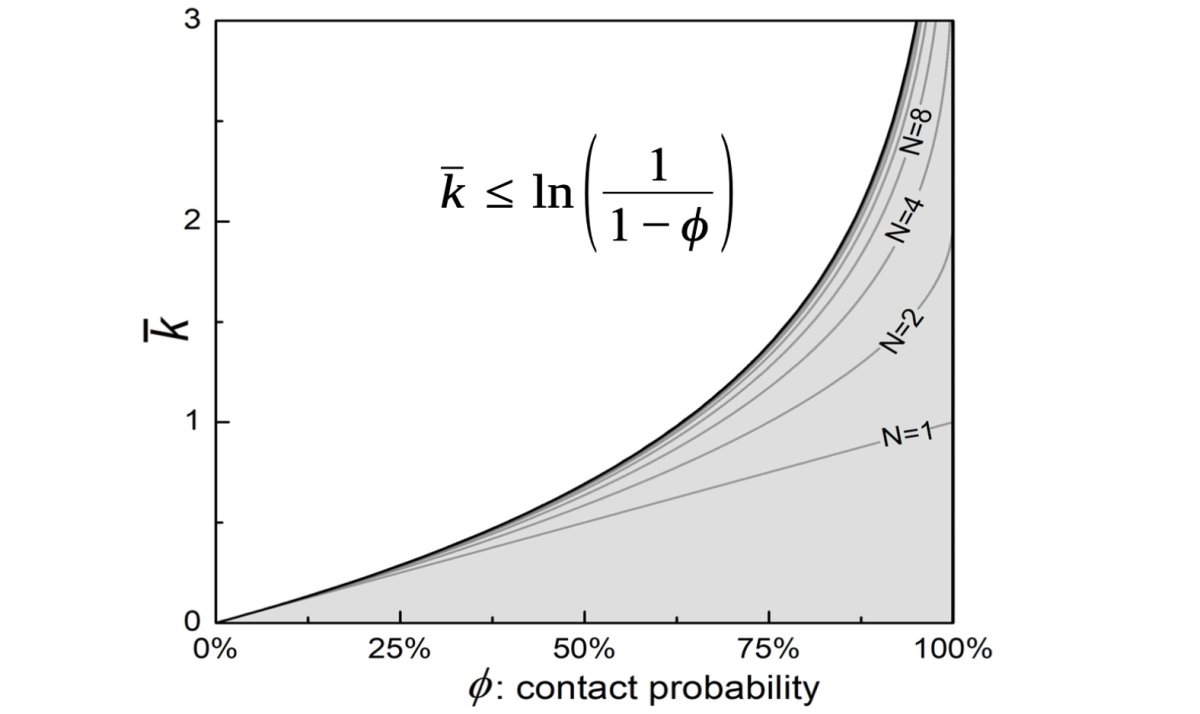
Here, I show that detecting extraterrestrial technoemissions depends on whether Earth lies within their coverage region. Using a statistical model of hypothetical galactic signal emitters, I show that even with a 50% chance of Earth being within a signal’s reach, the expected number of detectable civilizations remains below one, regardless of how many emitters exist in the galaxy.
Technosignature papers
C. Grimaldi, Undetected past contacts with technological species: implications for technosignature science, AJ 171 154 (2026)
A. Balbi, C. Grimaldi, Technosignatures Longevity and Lindyʼs Law, AJ 167 119 (2024)
C. Grimaldi, Upper bounds on technoemission rates from 60 years of ‘‘silence’’, Acta Astron 212 95 (2023)
C. Grimaldi, Inferring the Rate of Technosignatures from 60 yr of Nondetection, AJ 165 129 (2023)
M. Lingam, C. Grimaldi, A. Balbi, A birth-death-migration model for life in astrophysical environments, MNRAS 509 4365 (2022)
A. Balbi, C. Grimaldi, (2022). Statistical Issues in the Search for Technosignatures. In Technosignatures for Detecting Intelligent Life in Our Universe, A. Berea (Ed.). p.127-147
C. Grimaldi, M. Lingam, A. Balbi, Feasibility of Detecting Interstellar Panspermia in Astrophysical Environments, AJ 162 23 (2021)
C. Grimaldi, Demography of technosignatures, MNRAS 500 2278 (2021)
A. Balbi, C. Grimaldi, Quantifying the information impact of future searches for exoplanetary biosignatures, PNAS 117 21031 (2000)
J. Haqq-Misra, A. Berea, A. Balbi, C. Grimaldi, Searching for technosignatures: Implications of detection and non-detection, arXiv preprint arXiv:1903.06550
C. Grimaldi, G. W. Marcy, Bayesian approach to SETI, PNAS 115 E9755 (2018)
C. Grimaldi, G. W. Marcy, N. K. Tellis, F. Drake, Area Coverage of Expanding E.T. Signals in the Galaxy: SETI and Drake’s N, PASP 130 054101 (2018)
C. Grimaldi, Signal coverage approach to the detection probability of hypothetical extraterrestrial emitters in the Milky Way, Sci Rep 7 46273 (2017)